









Project Description
There is no ‘away’ and no such thing as ‘waste’ in sustainable economic systems. A circular economy is central to cutting greenhouse gases and building a climate-resilient, labour-intensive economy. Textiles, especially when part of high street fashion, are more greenhouse gas intensive than most people realise. It is for these reasons that Credible Carbon jumped at the opportunity to support the Connacher Textile Recycling Project.
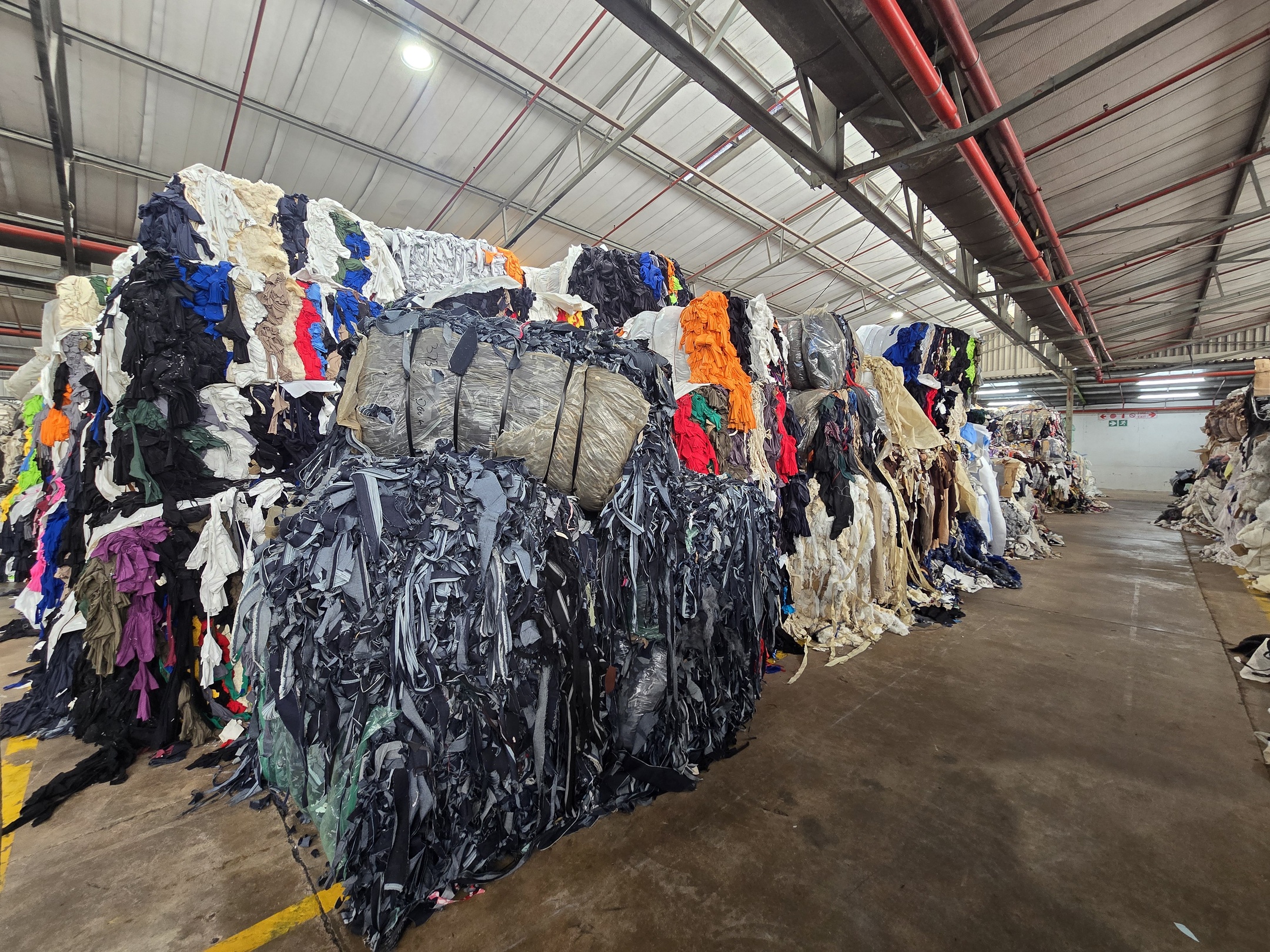
Based in Hammarsdale, KwaZulu-Natal, Connacher operates a large-scale textile recycling facility that processes pre-consumer textile waste from cut-make-trim operations into shredded fibre, or “shoddy”. This recycled fibre is then sold to downstream manufacturers and used as a substitute for virgin flexible polyurethane foam in products such as bedding and automotive components. The project is a practical example of circular economy thinking in action: waste that would otherwise be landfilled is kept in productive use, while virgin fossil-fuel-derived material demand is reduced.
Connacher’s carbon project is built around a simple but important idea: textile waste has value, and with the right processing and market support it can displace more carbon-intensive virgin materials. The project has been independently audited and confirmed to be operational, with the technology in place and functioning as designed.
Climate Impact
The project delivers climate benefits in two main ways. First, it diverts textile waste from landfill, avoiding methane emissions that would otherwise arise as waste decomposes. Second, it displaces virgin flexible polyurethane foam, a fossil-fuel-derived material associated with emissions during manufacture. The verified emissions reductions are calculated after accounting for project-related electricity and diesel use.
For the initial verification period from 1 July 2022 to 30 June 2025, the project achieved verified emission reductions of approximately 63,234 tCO2e. This follows an independent audit that adjusted the original claim to include diesel consumption and a revised methane correction factor, resulting in a conservative and credible verified figure.
The project therefore demonstrates how industrial recycling can produce measurable, auditable climate impact while supporting a transition away from virgin material use and landfill disposal.
How the Project Works
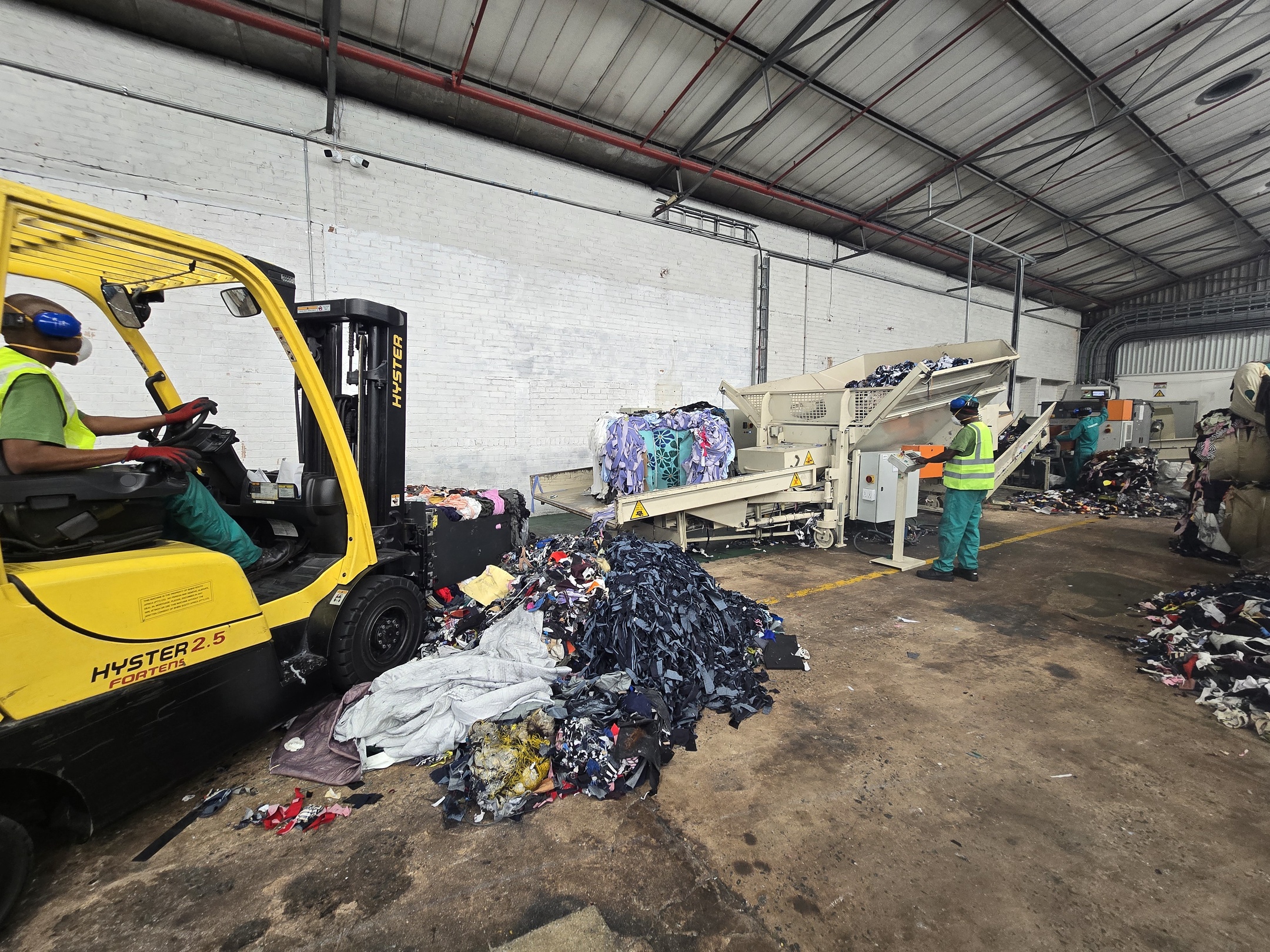
Connacher receives pre-consumer textile waste, primarily from textile cut-make-trim facilities across South Africa. This material is sorted and mechanically processed using specialised fibre-opening equipment. The waste is cleaned of impurities, blended to client specifications, torn and shredded into soft recycled fibre, treated where necessary, and then baled for sale to downstream manufacturers.
That recycled fibre is then used in downstream applications where it partially substitutes for virgin PU foam, particularly in the bedding and automotive industries. In this way, the project creates a circular material flow: textile offcuts that would otherwise be discarded are converted into a useful secondary raw material.
The facility uses mechanised production technology and real-time automated record-keeping for materials and electricity monitoring, which supports both operational control and carbon accounting. The audit confirmed that the technology is fit for purpose and functioning according to design specifications.

Community & Social Impact
The Connacher Textile Recycling Project generates clear social and economic benefits in Hammarsdale and beyond. The audited report states that the operation provides 32 blue-collar jobs, supports small suppliers involved in textile waste collection and preparation, and includes a commitment to allocate 50% of carbon credit revenues towards worker upliftment and community poverty alleviation initiatives.
The project also supports informal waste collectors and small waste-entrepreneur businesses that collect and supply textile waste. By creating a reliable market for this material, Connacher helps develop profitable collection routes and steady income opportunities. The project documentation also highlights broader community benefits through reduced landfill pressure, lower pollution, and improved local living environments near waste sites.
Beyond direct employment, the project contributes to a more inclusive circular economy by strengthening local value chains, supporting productive enterprise, and reducing dependence on virgin and imported material inputs.
Contribution to SDG goals
 | SDG 1: Supports informal waste entrepreneurs and collectors by creating income opportunities from recyclable textile waste. |
 | SDG 3: Reduces harmful impacts linked to open dumping, burning at landfills, and pollution from unmanaged textile waste. |
 | SDG 6: Helps prevent textile waste and microplastics from entering freshwater systems. |
 | SDG 8: Creates jobs, supports waste collectors, and promotes inclusive, productive economic activity. |
 | SDG 9: Uses specialised industrial recycling technology to convert waste into a viable manufacturing input. |
 | SDG 11: Improves waste management outcomes and supports safer, better-managed working conditions and urban environments. |
 | SDG 12: Reduces textile waste generation through recycling and material recovery. |
 | SDG 13: Cuts emissions by avoiding landfill methane and reducing demand for virgin fossil-fuel-based foam. |
 | SDG 14: Helps keep textile-related pollution and microplastics out of rivers and oceans. |
 | SDG 15: Reduces reliance on landfill disposal and the associated habitat and ecosystem pressures. |
 | SDG 17: Creates opportunities for collaboration across communities, business, waste collectors, and the broader circular economy ecosystem. |
Project Idea Note
A Project Idea Note (PIN) was drawn up to formalise the project scope with regards to carbon credits.
Audits
Project Auditor
Enuity Consulting (Independent Third-Party Auditor)
Audit Summary
An independent verification was conducted for the period 1 July 2022 to 30 June 2025 in accordance with the Credible Carbon Standard Version 2.0. The audit included a site visit, review of project records and emissions calculations, inspection of the recycling facility, and follow-up assessment of key operational data.
Methodologies Applied
-
CDM AMS-III.AJ – Recovery and recycling of materials from solid waste
-
Associated CDM landfill emissions tool – for estimating methane emissions from landfill disposal
-
Project calculations covering landfill diversion, substitution of virgin polyurethane foam, and leakage from electricity and diesel use
Verification Outcome
The audit confirmed 63,234 tCO2e of verified emission reductions for the reporting period, as well as clear social benefits through local employment and support for waste collection and recycling value chains.