






Project Description
In nature, there is no such thing as waste. Yet most South African cities still operate under a linear take–make–dispose economy that contributes to natural resource depletion and a growing landfill crisis. Changing this trajectory requires deliberate interventions that promote circular material flows while creating work opportunities for the people who need them most.
The project diverts green waste material from Cape Town’s critically over-loaded landfill sites. In doing so, it prevents organic waste and fats, oils and grease from contaminating the city’s watercourses and wastewater systems, where they contribute to pollution, blockages and methane generation.
Operating since 2009, Zero to Landfill Organics (ZTL Organics) collects food waste, garden waste, animal mortalities, and fats, oils and grease (FOG) from commercial clients across the City of Cape Town. This waste is processed at a dedicated composting facility in Philippi, where it is transformed into compost used by landscapers, farmers, and community food-growing initiatives.
By preventing organic waste from decomposing anaerobically in landfill or wastewater systems, the project avoids the release of methane — a greenhouse gas with a global warming potential many times greater than carbon dioxide.
- Project Developer: Zero to Landfill Organics
- Location: Philippi, Cape Town, South Africa
- Crediting Period: 1 April 2022 – 31 March 2025
- Standard: Credible Carbon
- Project Type: Waste → Composting → Avoided Methane Emissions
Climate Impact
Between 1 April 2022 and 31 March 2025, the project achieved:
-
5,496 tCO2e of verified emission reductions issued under the Credible Carbon Standard
-
4,649 tonnes of organic waste processed, including food waste, garden waste, animal mortalities and fats, oils and grease (FOG)
These emission reductions have been independently verified and are eligible for issuance under the Credible Carbon Standard.
Beyond its climate benefits, the project provides practical, on-the-ground support for South Africa’s National Environmental Management: Waste Act (59 of 2008) and the National Waste Management Strategy (2020) by encouraging waste minimisation, reuse, and recycling, and enabling the transition towards a circular economy. The project demonstrates how organic waste can be managed as a resource rather than a liability, while delivering local environmental and social benefits.
How the Project Works
Organic waste is collected from 27 waste generators and additional waste logistics partners across Cape Town and transported to the ZTL Organics composting facility in Philippi.
At the site:
-
Waste is sorted to remove contaminants
-
Food, garden and animal waste is blended with mature compost
-
Liquid FOG waste is applied to compost wells within open windrows
-
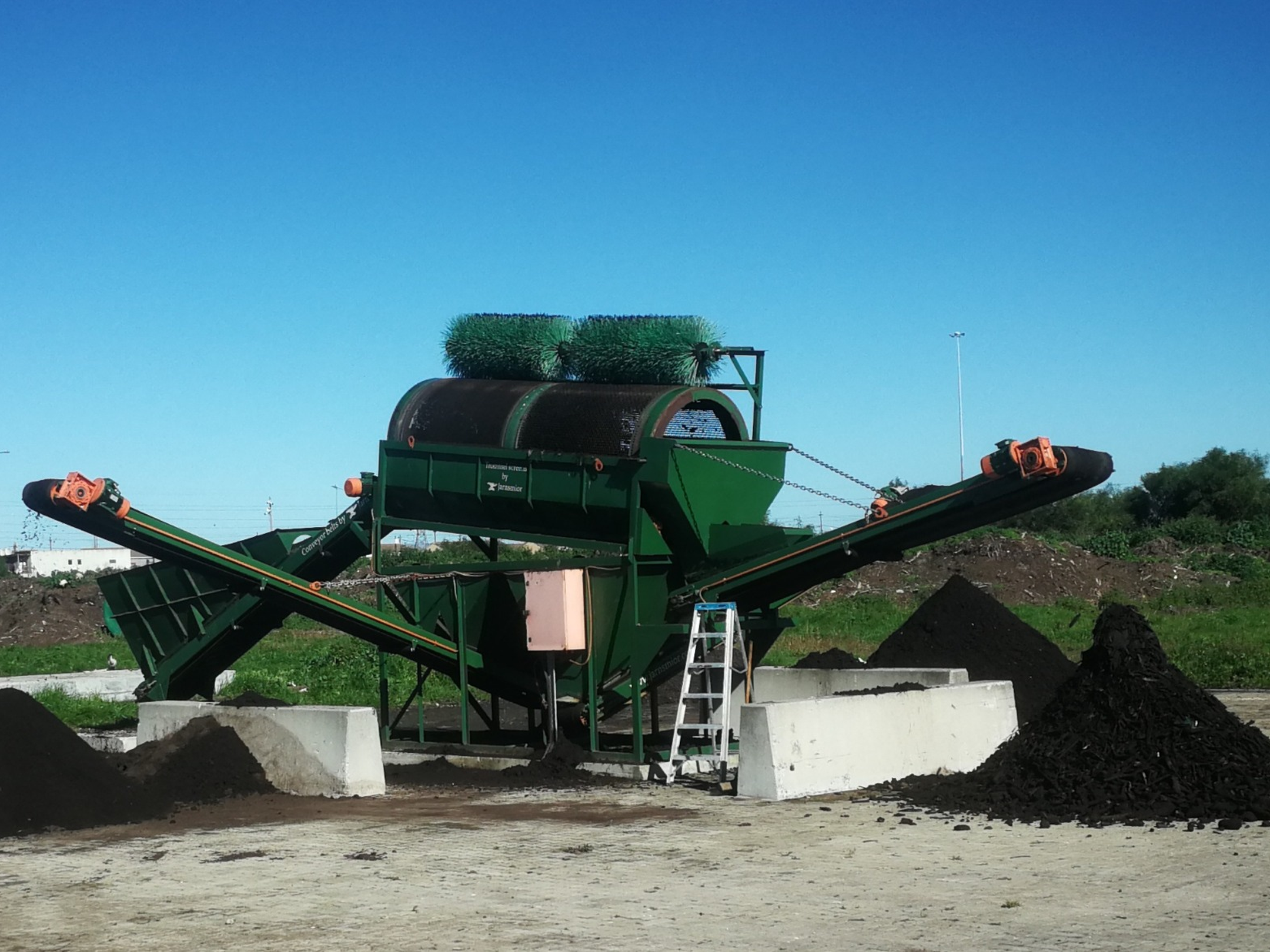
Windrows are regularly turned to ensure thermophilic aerobic composting
-
Finished compost is sieved and sold locally
All composting takes place on a concreted surface with runoff contained on-site, ensuring no pollution of the surrounding environment.
The project quantifies emissions using the assumptions in internationally recognised carbon market methodologies, including:
-
CDM AMS-III.F – Avoidance of methane emissions through composting
-
CDM AMS-III.H – Methane recovery in wastewater treatment
-
CDM TOOL04 and TOOL13, applying IPCC 2019 Refinements
Baseline emissions assume organic waste would otherwise be landfilled or treated in municipal wastewater systems, which remains the default waste management practice in South Africa.
Project emissions from fuel use and composting processes are conservatively accounted for and deducted from baseline emissions to determine net emission reductions.

Community & Social Impact
The project currently employs seven staff members, supporting approximately 22 dependants in an economically marginalised area of Cape Town.
In line with Credible Carbon requirements:
-
50% of net carbon revenue is committed to employees
-
Funds support education, household stability, and long-term financial resilience
-
Employment is created close to under-served communities, reducing transport costs and improving job accessibility
The compost produced contributes to urban agriculture, food security, and soil health, creating wider social and environmental benefits beyond carbon mitigation.
Contribution to SDG goals
 | SDG 1: The project provides stable employment and commits 50% of net carbon revenue to employee education and financial support, improving household security. |
 | SDG 2: Compost produced by the project improves soil health and crop yields, supporting urban agriculture and local food production. |
 | SDG 4: Carbon revenue is used to help employees access education for their children, supporting long-term social mobility. |
 | SDG 8: The project creates local employment in an underdeveloped area, reducing travel costs and supporting inclusive economic activity. |
 | SDG 13: By diverting organic waste from landfill and wastewater treatment, the project reduces methane emissions and delivers verified climate mitigation outcomes. |
Project Idea Note
A Project Idea Note (PIN) was drawn up to formalise the project scope with regards to carbon credits.
Audits
Project Auditor
The Green House (Independent Third-Party Auditor)
Audit Summary
An independent verification was conducted for the period 1 April 2022 to 31 March 2025 in accordance with the Credible Carbon Standard. The audit included a site visit, review of operational and fuel records, and independent recalculation of greenhouse gas emissions.
Methodologies Applied
-
CDM AMS-III.F – Avoidance of methane emissions through composting
-
CDM AMS-III.H – Methane recovery in wastewater treatment
-
CDM TOOL04 and TOOL13, applying IPCC 2019 Refinements (AR5)
Verification Outcome
The audit confirmed 5,496 tCO2e of verified emission reductions and a clear poverty alleviation impact through local employment.